 Image 1 of 4
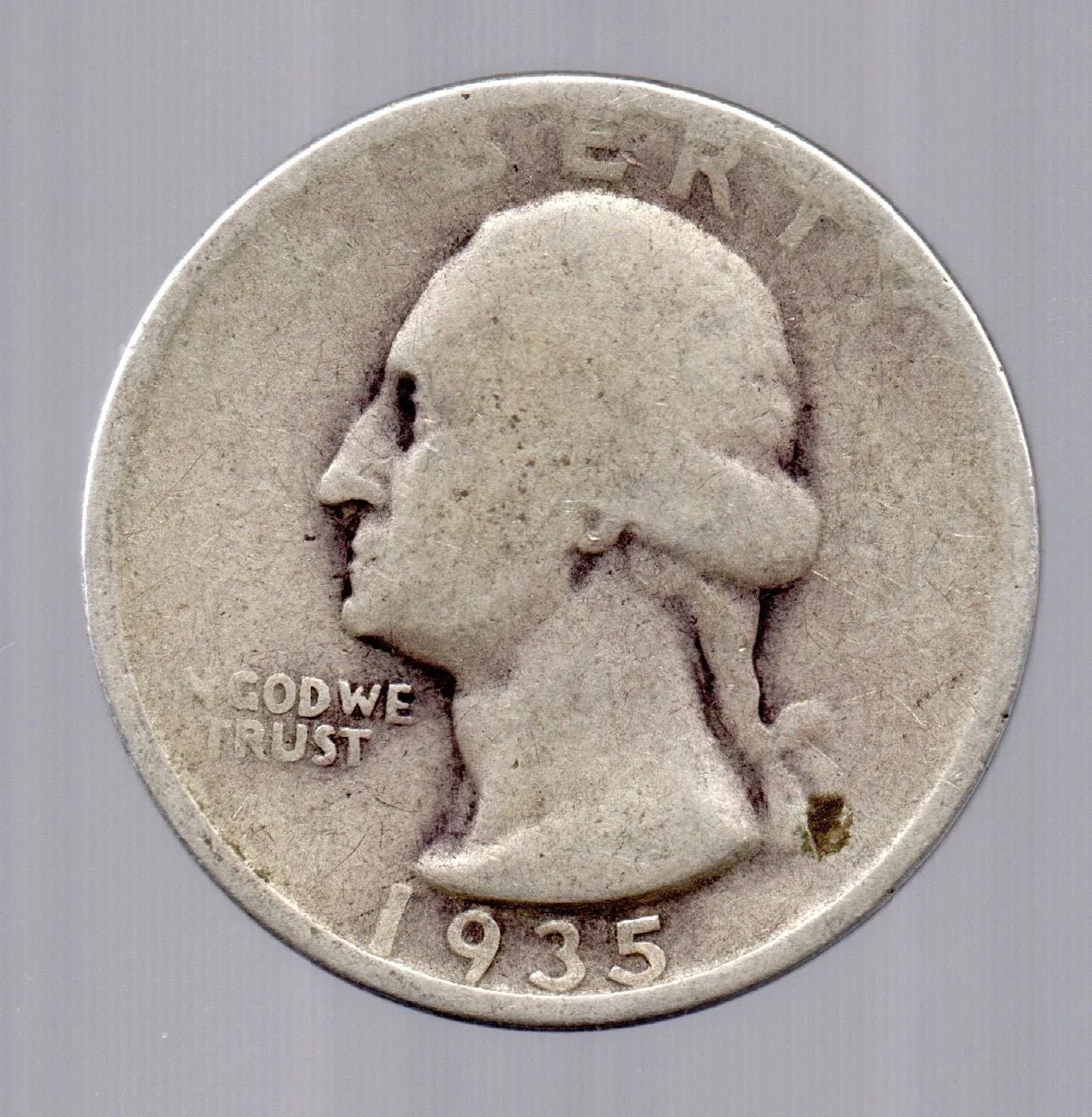 Image 2 of 4
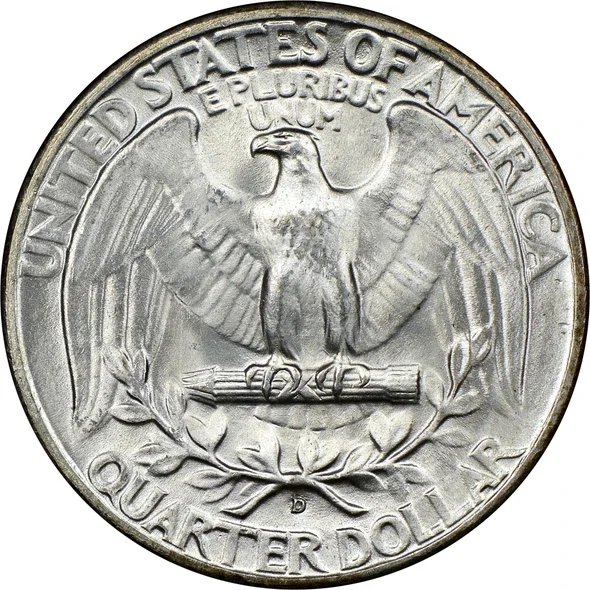 Image 3 of 4
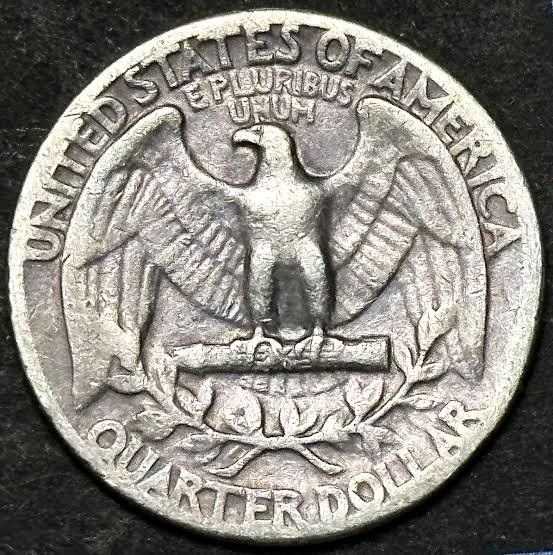 Image 4 of 4
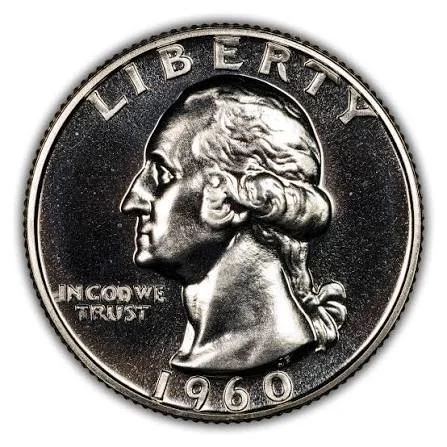
Washington quarters minted from 1932 to 1964 (plus 1976 Bicentennial silver issues) contain 90% silver and 10% copper. Each coin holds roughly 0.18084 troy ounces of pure silver, making them a popular choice for both coin collectors and precious metals investors. [1, 2, 3, 4, 5]
Key Identification Details
Dates: Any regular-issue Washington quarter dated 1964 or earlier is silver. Quarters from 1965 onward are copper-nickel clad.
Edge Check: Silver quarters show a solid metallic side. Clad quarters reveal a distinct copper stripe or layer on the outer edge.
Weight: Real silver quarters weigh 6.25 grams, while modern clad versions weigh 5.67 grams. [1]
Rare and Key Dates
1932-D and 1932-S: Very low mintages make these the most valuable regular-issue dates in circulated or uncirculated condition.
1933: No quarters were minted this year at all.
Bicentennial (1976): Special 40% silver uncirculated and proof sets were minted by the U.S. Mint alongside standard clad versions. [1, 2, 3, 4, 5]
Washington quarters minted from 1932 to 1964 (plus 1976 Bicentennial silver issues) contain 90% silver and 10% copper. Each coin holds roughly 0.18084 troy ounces of pure silver, making them a popular choice for both coin collectors and precious metals investors. [1, 2, 3, 4, 5]
Key Identification Details
Dates: Any regular-issue Washington quarter dated 1964 or earlier is silver. Quarters from 1965 onward are copper-nickel clad.
Edge Check: Silver quarters show a solid metallic side. Clad quarters reveal a distinct copper stripe or layer on the outer edge.
Weight: Real silver quarters weigh 6.25 grams, while modern clad versions weigh 5.67 grams. [1]
Rare and Key Dates
1932-D and 1932-S: Very low mintages make these the most valuable regular-issue dates in circulated or uncirculated condition.
1933: No quarters were minted this year at all.
Bicentennial (1976): Special 40% silver uncirculated and proof sets were minted by the U.S. Mint alongside standard clad versions. [1, 2, 3, 4, 5]