 Image 1 of 4
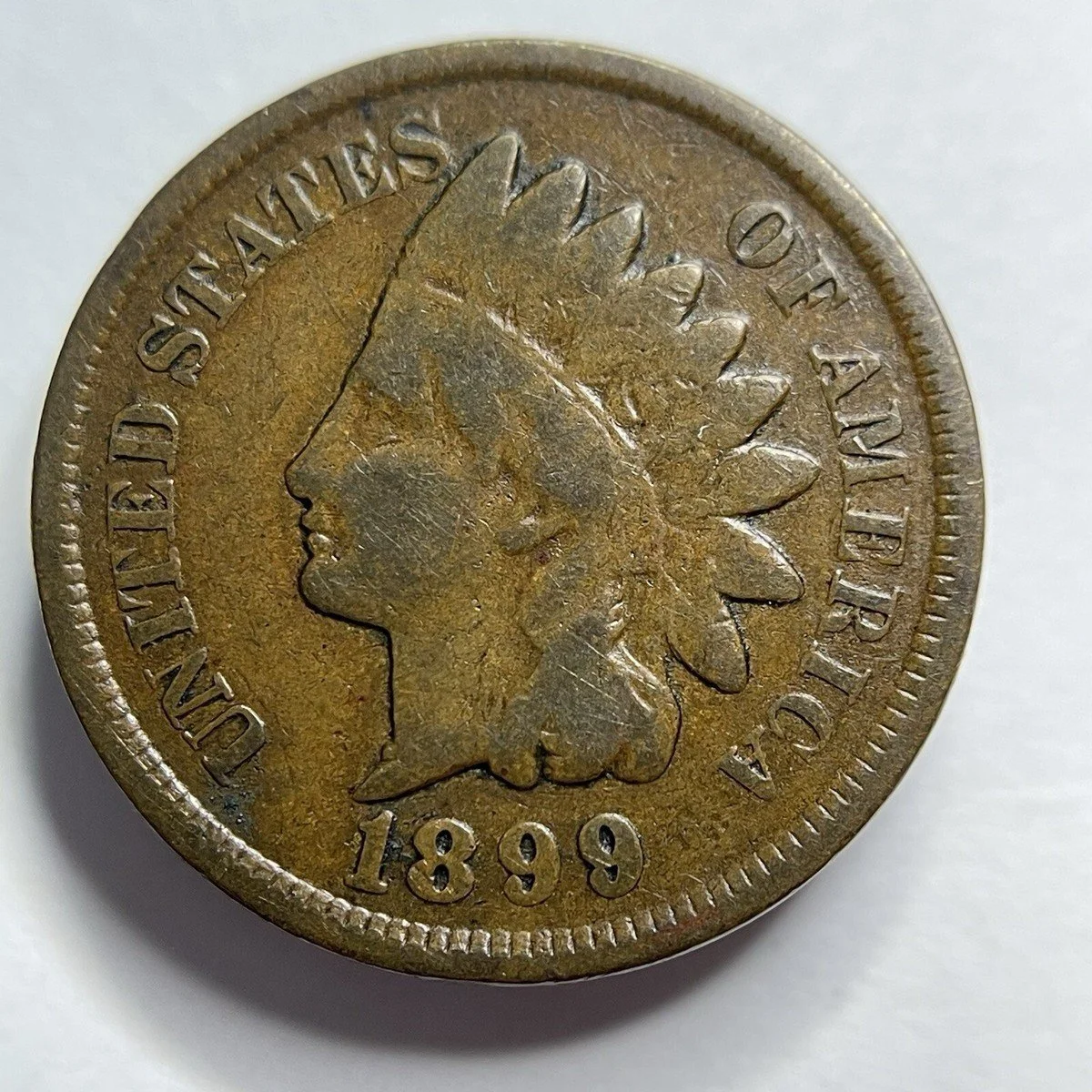 Image 2 of 4
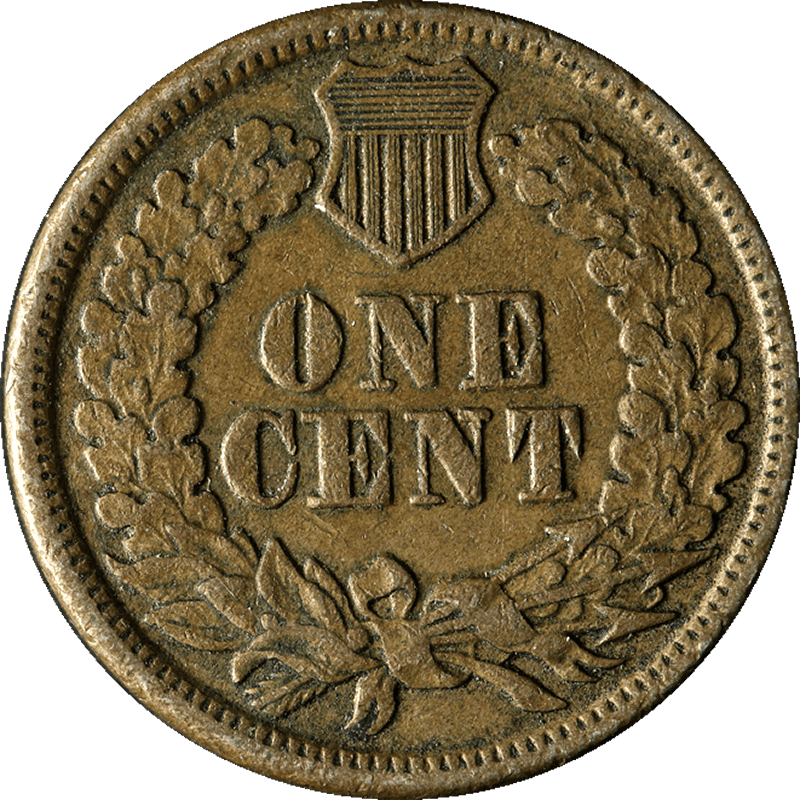 Image 3 of 4
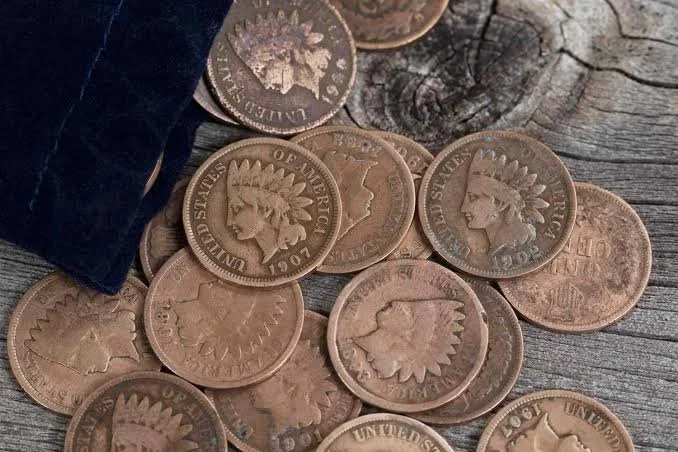 Image 4 of 4
INDIAN HEAD PENNY
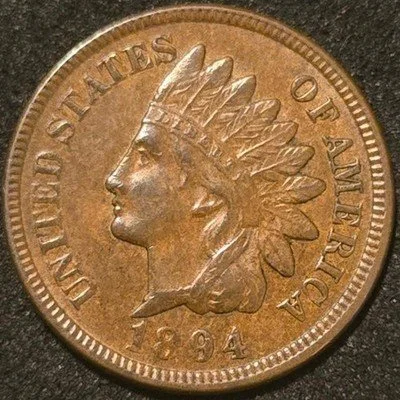
The Indian Head Cent was minted by the U.S. Mint from 1859 to 1909. Designed by James Barton Longacre, the obverse features a profile of Lady Liberty wearing a Native American feathered headdress, while the reverse displays the face value framed by a wreath and a small shield.
Design & Specifications
Obverse: Lady Liberty facing left in a feathered headdress, inscribed with "LIBERTY" on her headband and encircled by "UNITED STATES OF AMERICA" and the year.
Reverse: Features "ONE CENT" inside a wreath (laurel in 1859, oak and a shield from 1860 onward).
Designer: James Barton Longacre.
Diameter: 19 mm.
Composition Changes
1859–1864 (Copper-Nickel): Composed of 88% copper and 12% nickel, giving these early issues a thicker, whitish-gray or pale look often called a "white cent".
1864–1909 (Bronze): Composed of 95% copper and 5% tin/zinc, reducing the coin's weight to 3.1 grams and making it thinner. The rare 1864 "L" on ribbon variety includes the designer's initial "L" on the hair ribbon.
Mint Marks & Key Dates
Mint Location: Almost all were struck at the Philadelphia Mint (no mint mark). Only the 1908-S and 1909-S issues feature an "S" mint mark on the reverse below the wreath.
Key Dates: The 1877 (lowest regular mintage) and the 1909-S are the rarest and most valuable circulation dates.
If you're looking for information on a specific coin, tell me:
The year stamped on the coin
Its condition or color (brown, red-brown, or bright red)
INDIAN HEAD PENNY
The Indian Head Cent was minted by the U.S. Mint from 1859 to 1909. Designed by James Barton Longacre, the obverse features a profile of Lady Liberty wearing a Native American feathered headdress, while the reverse displays the face value framed by a wreath and a small shield.
Design & Specifications
Obverse: Lady Liberty facing left in a feathered headdress, inscribed with "LIBERTY" on her headband and encircled by "UNITED STATES OF AMERICA" and the year.
Reverse: Features "ONE CENT" inside a wreath (laurel in 1859, oak and a shield from 1860 onward).
Designer: James Barton Longacre.
Diameter: 19 mm.
Composition Changes
1859–1864 (Copper-Nickel): Composed of 88% copper and 12% nickel, giving these early issues a thicker, whitish-gray or pale look often called a "white cent".
1864–1909 (Bronze): Composed of 95% copper and 5% tin/zinc, reducing the coin's weight to 3.1 grams and making it thinner. The rare 1864 "L" on ribbon variety includes the designer's initial "L" on the hair ribbon.
Mint Marks & Key Dates
Mint Location: Almost all were struck at the Philadelphia Mint (no mint mark). Only the 1908-S and 1909-S issues feature an "S" mint mark on the reverse below the wreath.
Key Dates: The 1877 (lowest regular mintage) and the 1909-S are the rarest and most valuable circulation dates.
If you're looking for information on a specific coin, tell me:
The year stamped on the coin
Its condition or color (brown, red-brown, or bright red)