 Image 1 of 3
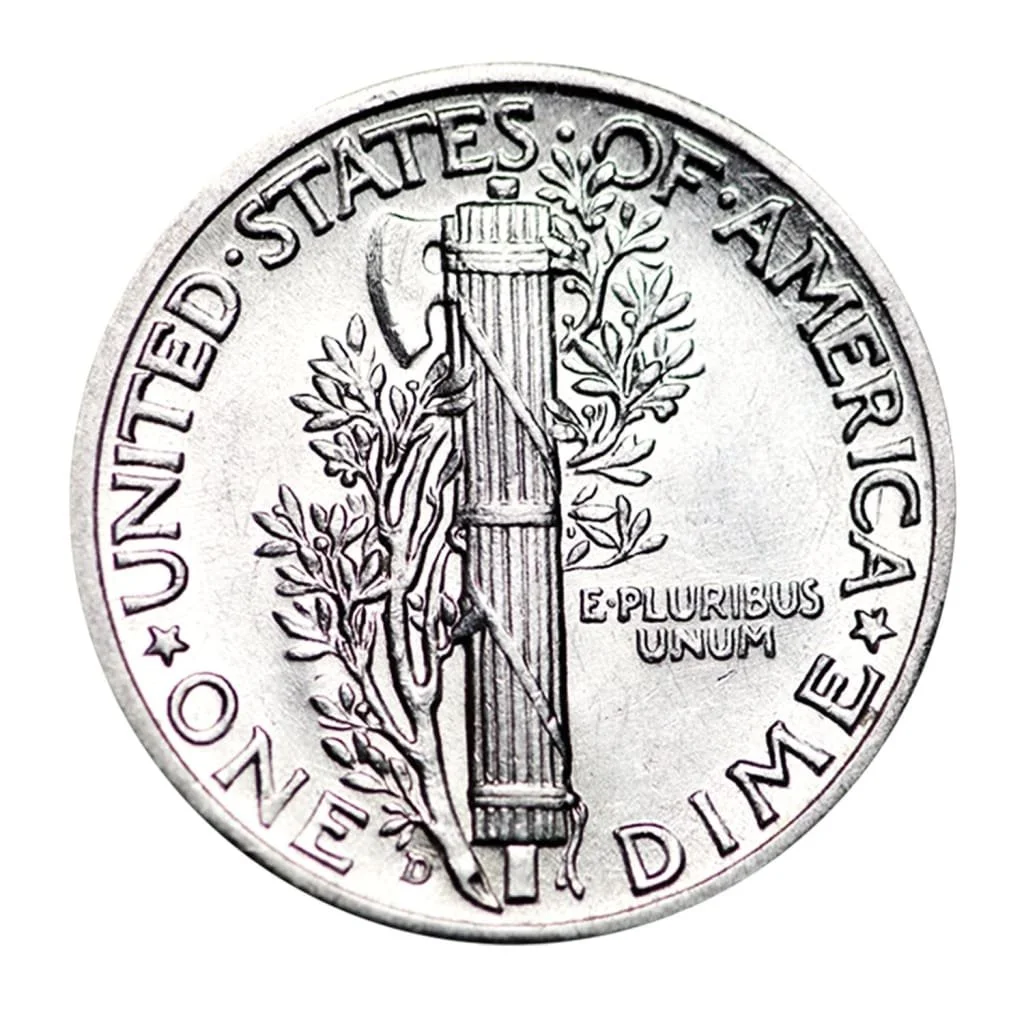 Image 2 of 3
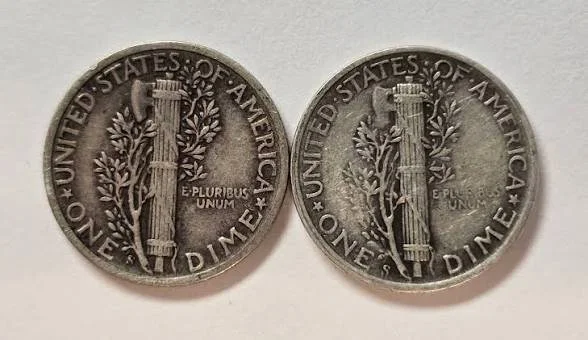 Image 3 of 3
MERCURY DIME DESCRIPTION
Obverse:
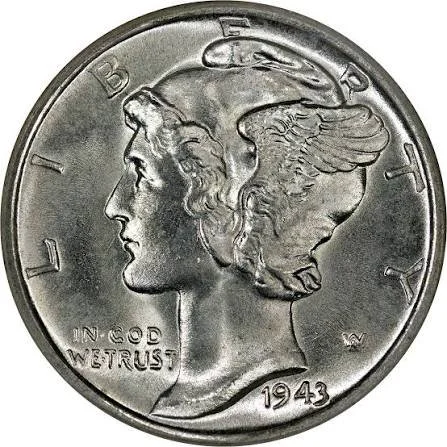
Design: Portrait of Liberty wearing a winged Phrygian cap, commonly mistaken for the Roman god Mercury; the image symbolizes freedom of thought.
Designer: Adolph A. Weinman.
Legend: LIBERTY appears along the rim; IN GOD WE TRUST is inscribed near the chin; the date is at the lower right.
Field and strike: High-relief portrait with fine hair and wing detail; devices may show reflective fields and frosted portrait on well-struck examples.
Reverse:
Design: A fasces (bundle of rods bound around an axe) symbolizing strength and unity, flanked by an olive branch representing peace.
Legend: UNITED STATES OF AMERICA around the rim; E PLURIBUS UNUM appears to the left of the fasces; denomination ONE DIME at the base.
Designer: Adolph A. Weinman.
Detail: Crisp fasces rods and olive-leaf veins on well-preserved coins; rim and lettering should be sharply defined.
General Information:
Official name: Winged Liberty Head dime (commonly called the Mercury dime).
Minting years: 1916–1945.
Composition: 90% silver, 10% copper.
Weight: 2.50 grams.
Diameter: 17.9 mm.
Edge: Reeded.
Mintmarks:
Location: On coins dated 1917 and later, mintmark appears to the right of the fasces on the reverse, adjacent to the rim. 1916 issues have mintmarks below the wreath? (Note: 1916-D dimes were minted in Denver; check specific year placement if needed.)
Common mintmarks: D (Denver), S (San Francisco); no mintmark indicates Philadelphia.
Collecting notes:
Key dates: 1916-D is the most famous scarce issue. Other dates with high value include certain low-mintage years and coins in exceptional grade.
Condition: Large differences in value between circulated, high-grade uncirculated, and certified mint-state coins. Look for original mint luster, absence of heavy wear on Liberty’s cheek and wing, and sharpness of the fasces and olive branch.
Silver content: Contains approximately 0.07234 troy ounce of silver per coin.
Common issues: Circulation wear shows smoothing of the wing tips and cheek on obverse, and flattening of fasces rods and olive leaves on reverse; bag marks and rim nicks can affect grade.
Authentication tips:
Weight and diameter testing verify basic authenticity.
Edge reeding should be uniform and continuous.
Seek certification from reputable grading services for high-value pieces.
Historical context:
Issued to replace the Barber dime; admired for its artistic design and considered one of the classic U.S. coin designs of the early 20th century.
Designer Weinman also created the Walking Liberty half dollar.
Use this description for catalog entries, auction lot descriptions, or general informational material about the Mercury (Winged Liberty Head) dime.
MERCURY DIME DESCRIPTION
Obverse:
Design: Portrait of Liberty wearing a winged Phrygian cap, commonly mistaken for the Roman god Mercury; the image symbolizes freedom of thought.
Designer: Adolph A. Weinman.
Legend: LIBERTY appears along the rim; IN GOD WE TRUST is inscribed near the chin; the date is at the lower right.
Field and strike: High-relief portrait with fine hair and wing detail; devices may show reflective fields and frosted portrait on well-struck examples.
Reverse:
Design: A fasces (bundle of rods bound around an axe) symbolizing strength and unity, flanked by an olive branch representing peace.
Legend: UNITED STATES OF AMERICA around the rim; E PLURIBUS UNUM appears to the left of the fasces; denomination ONE DIME at the base.
Designer: Adolph A. Weinman.
Detail: Crisp fasces rods and olive-leaf veins on well-preserved coins; rim and lettering should be sharply defined.
General Information:
Official name: Winged Liberty Head dime (commonly called the Mercury dime).
Minting years: 1916–1945.
Composition: 90% silver, 10% copper.
Weight: 2.50 grams.
Diameter: 17.9 mm.
Edge: Reeded.
Mintmarks:
Location: On coins dated 1917 and later, mintmark appears to the right of the fasces on the reverse, adjacent to the rim. 1916 issues have mintmarks below the wreath? (Note: 1916-D dimes were minted in Denver; check specific year placement if needed.)
Common mintmarks: D (Denver), S (San Francisco); no mintmark indicates Philadelphia.
Collecting notes:
Key dates: 1916-D is the most famous scarce issue. Other dates with high value include certain low-mintage years and coins in exceptional grade.
Condition: Large differences in value between circulated, high-grade uncirculated, and certified mint-state coins. Look for original mint luster, absence of heavy wear on Liberty’s cheek and wing, and sharpness of the fasces and olive branch.
Silver content: Contains approximately 0.07234 troy ounce of silver per coin.
Common issues: Circulation wear shows smoothing of the wing tips and cheek on obverse, and flattening of fasces rods and olive leaves on reverse; bag marks and rim nicks can affect grade.
Authentication tips:
Weight and diameter testing verify basic authenticity.
Edge reeding should be uniform and continuous.
Seek certification from reputable grading services for high-value pieces.
Historical context:
Issued to replace the Barber dime; admired for its artistic design and considered one of the classic U.S. coin designs of the early 20th century.
Designer Weinman also created the Walking Liberty half dollar.
Use this description for catalog entries, auction lot descriptions, or general informational material about the Mercury (Winged Liberty Head) dime.